The house style, two ways: Laphroaig 10 and Quarter Cask
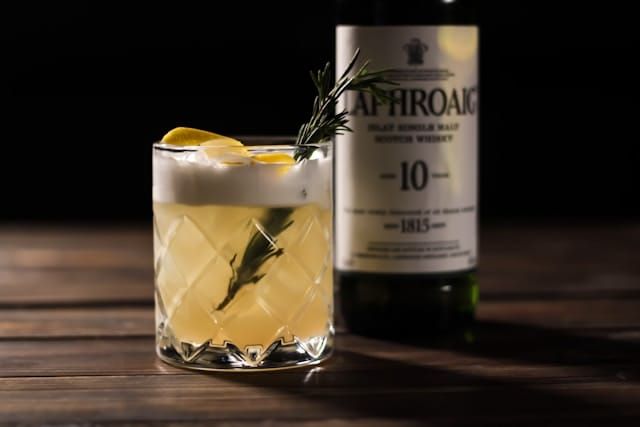
One of the best ways to get to know a distillery is to put two of its bottles next to each other, and see where they agree, and where they part company. Same spirit at the start, different decisions along the way, two different drams at the end.
Laphroaig gives you a particularly clean version of this story. The 10 and the Quarter Cask start from the same place, take different turns, and end up in vastly different places.
What's in the bottle?
I'll throw out a few numbers to get things going.
The 10 is exactly what it says on the tin: ten years, minimum, in ex-bourbon barrels. In Europe, it goes into the bottle at 40% ABV, the legal floor for Scotch. In the US, they get 43%.
The Quarter Cask wears no age statement. It spends its early years in the same ex-bourbon barrels as the 10, and then gets decanted into smaller American oak casks - the "quarter casks" of the name - for a second, shorter stint. Laphroaig doesn't tell you exactly how small, but industry convention for an American-oak quarter cask is roughly a quarter of a standard bourbon barrel, so around 50 litres. Less liquid sitting against more wood, deeper interaction between wood and whisky. The Quarter Cask is bottled at 48%.
Now, filtration - good to spare a few words on this, because it matters more than it sounds. Laphroaig's own website describes the Quarter Cask as "barrier filtered," basically a coarse strain to catch any bits of charred cask that came along for the ride. That is not chill filtration. Chill filtration is the more aggressive cousin: cool the whisky down to near freezing, push it through a fine filter, and you strip out the long-chain fatty acids and esters that can make a whisky go cloudy when cold water or an ice cube shows up. Chill filtration is done mostly so that the bottle looks bright on a shop shelf. Whether it also quietly removes flavour - this is one of the great whisky arguments of our time. Plenty of enthusiasts are convinced it does. Plenty of producers now make a selling point of not doing it. On the standard 10, Laphroaig says nothing about filtration one way or the other. The widely repeated view is that it is chill-filtered. I have no reason to doubt it, but Laphroaig does not confirm or deny the point.
Four differences, then: cask regime, age statement, strength, and - almost certainly - filtration.
What they taste like
I met the 10 first, which probably coloured everything that followed. Without apology, it delivers the thing for which Laphroaig is famous: that wonderfully peated quality that either charms you immediately or gets you later after a few more drams. Underneath, there's sweetness from the bourbon wood and a salty, brine-like edge. At 40% it goes down easily - peat clearly present, but not overpowering.
I expected the Quarter Cask to be the 10 with the dial cranked higher. Smaller casks, more wood, stronger pour - surely that should mean more of everything, and above all, more peat. Reader, no. What the Quarter Cask gave me wasn't a bigger version of the 10; it was a different shape. The smoke was still there, but rounded off at the edges. The wood had shouldered its way forward, bringing a creamier sweetness - toffee, vanilla - with it. The extra alcohol showed up as heat and density, rather than as extra peat. The finish ran longer and drier.
If you'll forgive the headline summary: the 10 is peat on top, and sweetness beneath. The Quarter Cask is sweetness and wood on top, with peat weaving through underneath. Both are unmistakably Laphroaig, each one its own thing, and neither one a variation on the other.
So, which do I prefer?
The 10. And for very simple reasons.
At 40% ABV, I can pour, sip, and enjoy, without my palate feeling like it's doing homework. At 48% ABV, the Quarter Cask asks a bit more of me. But that's a preference, and not a verdict on the whisky. And it's worth flagging the obvious rebuttal: you can always add a few drops of water to a 48% ABV whisky and meet it somewhere near 40%, but there's no trick for running the process in reverse on a whisky that's already been cut at the distillery. If you like being in charge of your own dilution, the Quarter Cask gives you room to move that you don’t get with the 10.
And if I'm being properly even-handed, the Quarter Cask probably has the stronger claim to being the more serious dram of the two - unfiltered in the way that most enthusiasts want, bottled at a strength that lets its texture show, and with that second cask adding something that the 10 does not have. But I just happen to prefer the 10.
Which should you buy first?
If you've never had a Laphroaig, start with the 10. It's the cleanest introduction to the distillery's character and to an Islay peat at this sort of intensity. You'll learn quickly whether Laphroaig is for you.
If you already know you like the 10 and fancy hearing the same distillery in a different register, the Quarter Cask is a genuinely different whisky rather than a line extension on a familiar name. It could be the more interesting one to accompany your nights.
I'd buy both again, that’s for sure.